




Uniglobe SS/College Best +2 College in Nepal

Author name: Anil Pantha

uniglobe Collelge | Uniglobe Secondary School
Blog

History Of Nepal

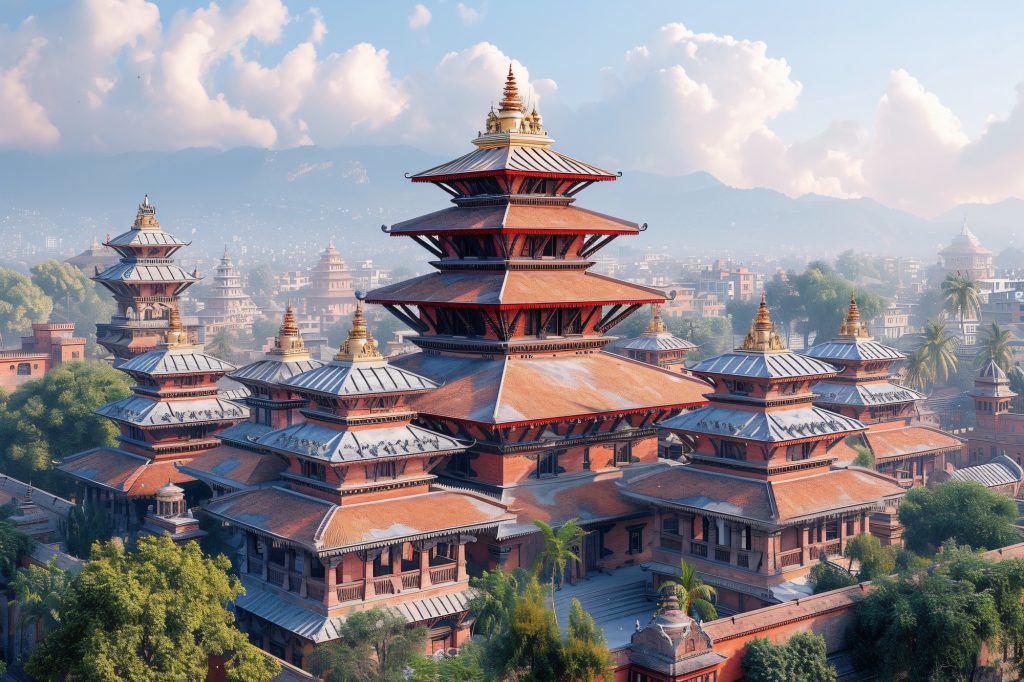
Nepal has a rich history dating back to ancient times. It was ruled by various local kingdoms before being unified in 1768. The 18th and 19th centuries saw conflicts with neighboring powers. Rana rule prevailed for much of the 20th century until 1951. Since then, Nepal has experienced political changes, including the suspension of the absolute monarchy in 2007, leading to a democratic system. This has ushered in a new era of growth and modernization for the country. Nepal, formally known as the Federal Democratic Republic of Nepal, is a landlocked nation found in South Asia. It is arranged fundamentally within the Himalayas and is bordered by China to the north and India to the south, east, and west. The history of Nepal could be a wealthy and differing embroidered artwork that ranges thousands of a long time, formed by a one-of-a-kind blend of topography, culture, and political improvements. Ancient Nepal: The most punctual follow of human homes within the locale of present-day Nepal dates back to the Paleolithic age. The rich fields of the Kathmandu Valley gave a perfect setting for early human settlements, and the zone got to be a center of civilization around 2000 BCE. The Kiratis, an antiquated tribe, are considered the primary rulers of Nepal, and their rule kept going until around 300 CE. Medieval Period: The medieval period in Nepal saw noteworthy political and social improvements. Within the 4th century CE, the Licchavi line came into control, introducing a period of thriving and social renaissance. Amid this time, Buddhism prospered, and exchange along the Silk Street brought riches and social trade. The Licchavi period eventually gave way to the Thakuri line, taken after by the Malla tradition, which saw the rise of a few free city-states inside Nepal. Unification beneath the Shah Line: Within the late 18th century, Nepal experienced a transformative stage under the administration of Ruler Prithvi Narayan Shah. He set out on an arrangement of military campaigns to unify the divided states and laid the establishment for present-day Nepal. Lord Prithvi Narayan Shah built up the Shah tradition, which ruled Nepal for over two centuries. Rana Run the show and Modernization: Within the mid-19th century, a powerful respectable family known as the Ranas picked up control of Nepal. The Rana rulers held the genetic position of prime services, successfully sidelining the government. Amid their run of the show, Nepal remained moderately separated from the exterior world. Be that as it may, within the early 20th century, the nation saw social and political changes impacted by the more extensive worldwide patterns. Democratic Development and Sacred Government: In 1951, a well-known rebellion drove the ousting of the Rana administration and the foundation of a protected government. Lord Tribhuvan played a pivotal part in this development, and his child, Lord Mahendra, proceeded with the method of political change. In 1962, Nepal embraced an unused structure and set up a parliamentary framework. In any case, in 1969, Ruler Mahendra suspended the structure and took coordinate control, starting a period of dictatorial run the show known as the Panchayat framework. Popular Government and Political Move: In 1990, mass dissents drove the reclamation of a multiparty vote-based system in Nepal. Ruler Birendra, beneath their well-known weight, restored the structure and permitted political changes. Nepal experienced a brief period of majority rule administration until the episode of a decade-long respectful war in 1996. The strife between the government and the Communist Party of Nepal (Maoist) looked to address socio-economic incongruities and political representation. The Monarchy’s Cancelation and Republic: In 2006, the civil war concluded with the marking of the Comprehensive Peace Understanding. Taking after the peace understanding, a Constituent together was shaped, entrusted with drafting a modern structure and choosing the destiny of the monarchy. In 2008, the gathering announced Nepal as a government majority rule republic and canceled the government. The final Lord of Nepal, Ruler Gyanendra, ventured down, stamping the conclusion of Nepal’s centuries-old government. Contemporary Nepal: Within a long time that taken after, Nepal confronted a few challenges on its way toward political soundness and financial improvement. The nation has seen political moves, including the drafting and declaration of a modern structure in 2015. Nepal also experienced an obliterating seismic tremor in 2015, which brought about critical misfortune of life and foundation harm. Nowadays, Nepal proceeds its travel as a government-law-based republic, striving for socioeconomic advancement, comprehensive administration, and territorial steadiness. The nation is famous for its magnificent Himalayan crests, wealthy social legacy, and a prevalent goal for experiencing tourism. Nepal’s history could be a confirmation of the strength and relentlessness of its individuals, who have explored various dynasties, political frameworks, and socio-economic changes to shape the country as it stands nowadays. By: Prayash Kadka (Science, G2)


Uniglobe College | Uniglobe Secondary School
Blog

A Letter To My Present Self

My dearest present self,               As I pen these words, my heart is filled with love and admiration for the person you are today. You have come so far, yet you have so much further. The journey ahead may be long and winding, but I know you have the courage and strength to face whatever challenges come your way. Dear present self, I know you are tired and it hurts. I know it feels like the earth has stopped revolving and all the light has been sucked by some black hole and all you are left with is darkness. I know you have questions, a head full of questions, and a mind full of What if, I know you feel that life has been unfair to you and has done you an injustice. But, trust me, life is never meant to be easy. Above all, hold onto the belief that this too shall pass. These tough days might be testing your patience and adaptability, but they also allow you to learn and grow. When things seem to be going bad, take a step back, breathe, and remind yourself of your strength. I know you often find yourself caught in a cycle of saying “yes” to everything, fearing that refusal might disappoint or upset others. But, it’s time to shift the perspective and embrace the power of “no”. Remember saying “no” is not a rejection of others. It’s a prioritization of yourself. Saying no when necessary is not a sign of selfishness; it’s an act of self-care and self-respect. Self-care is not selfish. Embrace the journey you’re on. Life is full of ups and downs, but each experience shapes you into the remarkable person you are today. Don’t be afraid to make mistakes and learn from them. It’s through these moments that you grow and evolve. Remember to celebrate your achievements, no matter how small they may seem. Be proud of yourself and give yourself credit where it’s due. You deserve to be proud of yourself and all that you’ve accomplished. Embrace every moment, both the good and the bad, for they are all part of your story. In the midst of the hustle and bustle, remember to enjoy the journey. Take time to appreciate the little moments and find gratitude in the everyday. Life is an adventure, so embrace it with open arms. Lastly, don’t forget to surround yourself with positivity and love. Surround yourself with people who lift you up and believe in you. You deserve to be surrounded by those who appreciate and support you for who you are. Keep shining, my incredible present self. The world is yours for the taking, and I have no doubt that you will continue to achieve amazing things. I’m here cheering you on every step of the way. Never forget that you are loved beyond measure. Can’t wait to see the incredible person you’ll become. With love and admiration, Your present self Soyanka By: Soyanka Khadka (Management, J2)

Uniglobe College | Uniglobe Secondary School
Blog

How Psychopaths See The World?

The eyes of a psychopath will deceive you; they will destroy you. They will take from you, your innocence, your pride, and eventually your soul. ― Dr. Samuel Loomis Psychopaths, by definition, have problems understanding the emotions of other people, which partly explains why they are so selfish, why they so callously disregard the welfare of others, and why they commit violent crimes at up to three times the rate of other people. Psychopaths see the world in a fundamentally different way than most people. They lack empathy, which means they do not feel the same emotional responses to other people’s suffering or distress as non-psychopathic individuals. As a result, psychopaths often have difficulty understanding or appreciating the feelings and perspectives of others. Psychopaths also tend to be highly self-centered and focused on their own goals and desires. They may be willing to exploit or manipulate others to achieve these goals, without regard for the impact on other people’s lives. This can lead to a lack of concern for the consequences of their actions, as well as a disregard for rules, laws, and social norms. In addition to these traits, psychopaths may also be highly impulsive and prone to taking risks. They may engage in thrill-seeking behavior, such as dangerous sports or criminal activity, without considering the potential negative outcomes. Overall, psychopaths see the world as a place where they are entitled to pursue their desires and goals without concern for the impact on others. They cannot empathize with others or understand the moral implications of their actions, which can lead to destructive behavior and negative outcomes for themselves and others. In conclusion, psychopathy is a complex personality disorder that affects a small but significant portion of the population. Psychopaths see the world in a fundamentally different way than non-psychopathic individuals, lacking empathy and the ability to understand the emotional and moral implications of their actions. While psychopaths may be highly successful in certain fields, their behavior can also be destructive and harmful to others. Understanding the causes and consequences of psychopathy is essential for developing effective interventions and strategies for managing this challenging disorder. By: Reshma Chapagain (Management, A2)

Uniglobe College | Uniglobe Secondary School
Blog

In The Eye Of The Storm: My Experience Of Surviving A Crisis

Surviving a crisis is an experience that changes you forever. I know this firsthand, having faced two devastating events that shook me to the core. The 2015 Nepali earthquake and the COVID-19 pandemic, which happened five years apart, left me reeling and struggling to find a way forward. The earthquake hit Nepal on April 25th, 2015, and it was a disaster that I could never have imagined. The ground shook violently, and I saw buildings collapse, roads crumble, and people screaming for help. It was like a scene from a horror movie, but it was real. I felt helpless and alone, and I knew that my life would never be the same again. The aftermath of the earthquake was just as harrowing. We were left without electricity, water, or food. We had to sleep outside in makeshift tents, constantly fearing that another quake could hit at any moment. The sense of isolation and despair was overwhelming. Five years later, the COVID-19 pandemic hit the world, and it felt like another cruel blow. The virus spread rapidly, and soon, the world was in lockdown. We were told to stay indoors, avoid contact with others, and wear masks. The streets that were once bustling with life were now empty, and the silence was deafening. The fear of getting sick or losing a loved one was always present. But despite all of this, I learned that there is always hope, even in the darkest of times. I saw people come together to help each other, providing food and shelter to those in need. I witnessed the courage and resilience of those around me, who refused to give up even when the odds were against them. In the eye of the storm, I discovered that the human spirit is stronger than any disaster. It’s what keeps us going when everything else has fallen apart. And it gives us the strength to rebuild and emerge stronger than before. As I reflect on my experiences, I realize that these crises have forever changed me. They have left me with scars that may never fully heal. But they have also taught me the value of life, the power of community, and the importance of hope. In the end, I can say that I am a survivor and that I am grateful for every moment of my life. Because in the eye of the storm, there is always a glimmer of light, and it’s up to us to find it. By: Yash Dangol Maharjan (Management, G1)

Uniglobe College | Uniglobe Secondary School
Blog

Navigating The Modern World: What Every 21st-Century Student Should Know

In today’s fast-paced world, being a student is not just about hitting the books anymore. It is about preparing yourself for the challenges and opportunities of living in the 21st century. So, what exactly do you need to know to thrive in this ever-changing landscape? Let us break it down: Tech Savviness: We live in a digital age, and being tech-savvy is non-negotiable. That means knowing your way around computers, smartphones, and the internet like a pro. However, it is not just about knowing how to use technology – it is also about understanding how it shapes our world and being thoughtful about how you engage with it. Thinking on Your Feet: Life throws curveballs, and you need to be able to think on your feet. Critical thinking and creative solutions, whether solving a tricky math problem or navigating a difficult conversation, are essential. Understanding Diversity: Our world is more interconnected than ever, which means understanding and respecting people from different backgrounds and cultures. Embracing diversity is not just the right thing to do – it is also essential for thriving in a globalized world. Spotting Fake News: With so much information, it can be hard to separate fact from fiction. That is why developing your media literacy skills and learning how to spot fake news is crucial. Critically evaluating information will serve you well in school, work, and life. Taking Care of Your Mental Health: School can be stressful, but it is essential to prioritize your mental health. Learning how to manage stress, build resilience, and ask for help when needed are skills that will serve you well both now and in the future. Money Matters: Financial literacy is essential for navigating the adult world, from budgeting to saving to understanding loans. Start building good money habits now, and you will thank yourself later. Protecting the Planet: Climate change is one of the biggest challenges of our time, and we must all do our part to protect the planet. Understanding environmental issues and making sustainable choices in daily life can make a real difference. Thinking Outside the Box: The world rewards creativity and innovation, so do not fear thinking outside the box. Whether you come up with a new invention or find a novel solution to a problem, being able to think creatively will set you apart. Doing the Right Thing: Having a solid moral compass in a world where ethical dilemmas are everywhere is essential. Always strive to do the right thing, even when challenging or popular. Never Stop Learning: Remember that learning does not stop when you graduate – it is a lifelong journey. Stay curious, keep exploring new ideas, and never stop growing as a person. In conclusion, being a 21st-century student means more than just memorizing facts and figures. It is about equipping yourself with the skills, knowledge, and values needed to thrive in our rapidly changing world. From tech savviness to critical thinking, from cultural understanding to ethical decision-making, each of these skills plays a crucial role in shaping your academic success and your success in life. So, embrace these lessons, stay curious, and never stop learning – because the journey of education lasts a lifetime. By: Suraj Thapa (Associate Program Coordinator: Management and Law)

Blog

Nepali Cricket: Its Past, Present And Future

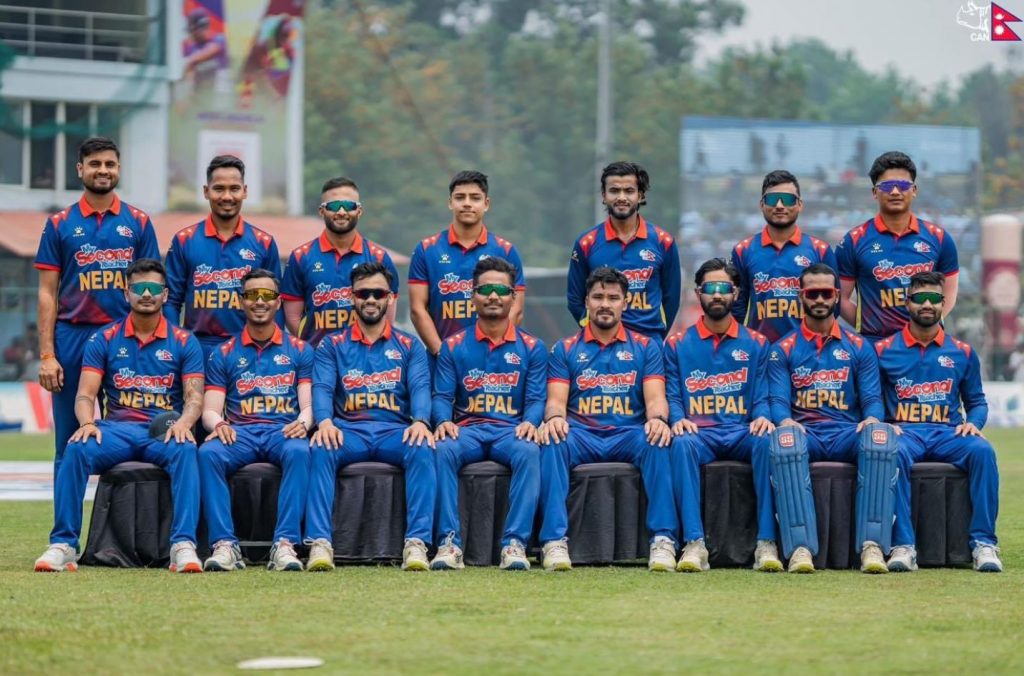
Cricket is a gentlemen’s game played with 11 players on each team. The game was established in England. In Nepal, The Ranas were the first to play the game. In the past, Nepali cricket was not well known across the Nation. The people were not familiar with it. The Nepali cricket team, including the most significant players like Paras Khadka, Shakti Gauchan, Sharad Veshwakar, and so on, were the players who had been there in the past. Nepal paid its first international T20 Asia Cup in 2014 AD. Our neighboring Nation, India, somehow influenced the cricket revolution in the past. The Nepali cricket team was not provided the proper equipment, well-managed ground, etc. which caused a negative impact on the games they played. In the past, in the late 1900s, cricket was played by the Ranas family, but later, the public started playing Cricket and now every Nepali loves to play Cricket.  The current captain of the Nepali cricket team is Rohit Kumar Paudel. The coach of the Nepali cricket team is Monti Desai. The Cricket Association of Nepal (CAN) has led the Nepal cricket team. Only last January did the Nepal team own or regain its ODI status. They recently won the ACC premier league, including nations like UAE, Oman, etc. After winning that league, they qualified for the Asia Cup in 2023. Nepal has achieved the most significant in playing the Asia Cup, where the world’s top teams participated. Nepal played a match against the strong side- Pakistan and India in the group stage of the Asia Cup in 2023. Unfortunately, they lost both matches, but they played well. All Nepali are so proud. The current Nepali Cricket team consists of great players like Sandip Lamichanne, Kushal Bhurtel, Lalit Narayan Rajbanshi, Dipendra Singh Airee, Aasif Sheikh, etc. The Nepal team is enhancing their potentiality, skills, and experiences daily. The Nepal team was selected for the Asian Games held in China. Where National teams like Kenya and China participated. Moreover, Nepali cricket is supported by crazy fans across the Nation. The fans express love and respect towards the Nepali cricket team which is a great motivation. So, the player and team management are so blessed to have this Kind of support from their fans. Regarding the future of Nepali cricket, the government should appropriately implement a budget to manage the ground. So, that crowd of fans would love to watch all the games. The player’s salary should be handsome so that a player gets motivated to play. The necessary equipment should be there for the Nepali cricket team. Hence, it enhances the Nepali cricket player’s capacity and power. Moreover, Nepal is doing great, and day by day it has increased its popularity in the ICC ranking. Soon we will all witness Nepal playing in the World Cup 2024. Therefore, Nepali cricket has the potential to make the Nation proud at the international level. The Cricket Ground should be constructed in every district to enhance the participation of youth in Cricket. The tournament should be organized frequently at all levels. The government should provide the necessary budgets. CAN should make a fair decision regarding the selection of players.  All age-grouped players should be motivated and they should be equally given opportunities so that they can enhance their cricketing skills. Only then will the overall growth of Nepali Cricket.  By: Abhisek Rajbanshi (Management, E2)

Uniglobe College | Uniglobe Secondary School
Blog

Enhancing and Empowering Student Wellness: A Journey to Mental Health Resilience

The pursuit of academic excellence is a formidable endeavor, encompassing both moments of elation and tribulation. As a diligent student, I have borne witness to the kaleidoscope of emotions inherent in a collegiate journey. Let’s take a deeper look at the ways our school is helping to bolster student wellness. Through the cultivation of personal narratives, the implementation of peer-supported initiatives, and the orchestration of diversity-inclusive programming, our educational community actively contributes to the cultivation of a resilient student body, particularly in the realm of mental health. We mustn’t forget our narratives, recognizing their potential to break the silence surrounding mental health. When we combine our strengths with those of our peers, we form a formidable alliance. Evidenced by student-led mental health initiatives, counseling services, and educational integration, we bear testament to the efficacy of collaborative efforts. It is essential to destigmatize imperfections and acknowledge our shared journey. Our commitment to empowering student well-being is an ongoing odyssey, wherein we cease to be mere spectators and instead evolve into active participants in shaping an environment that esteems mental health and nurtures personal development. Through embracing and recognizing our narratives, fostering connections with our peers, and engaging in initiatives that prioritize well-being, we not only endure but flourish amidst the complexities of student life. This is more than a mere strategy; it is a dedication to the conviction that a mentally resilient student body serves as the bedrock of academic success. Let us unite in laughter, dance, and sing our way toward a student experience characterized by greater health and happiness! By: Niharika Khadgi (Management, H1)

Blog

What Doesn’t Kill You Makes You STRONGER

I believe ‘everything happens for a reason’. People change so that you can learn to let go. Things go wrong so that you appreciate them when you realize they’re right. You believe lies so you eventually learn to trust no one but yourself. And sometimes good things fall apart so that better things can come together. Sometimes we want all the pain, suffering, agony, miseries, and challenges to vanish and never torment us apart but that remains just a hallucination of reality. We should know that even after the darkest night, the sun rises again. There are people in our lives who relentlessly try to drag us down and break our self-esteem.  People come into your life and you eventually realize that they were meant to be there, to serve some sort of purpose. All humans make mistakes. Sometimes things happen to you that may seem horrible, painful, and unfair at first, but in the reflection, you will find that without overcoming those obstacles you would never realize your full potential, strength, and willpower. My choices helped me realize that sometimes the hardest decisions a person can make will most likely lead to the best outcomes. What determines a person’s character aren’t the mistakes we make. It is how we take those mistakes and turn them into lessons rather than excuses.  “Not everyone gets happily ever after. Life is real and sometimes it’s ugly and you just have to learn how to cope. Even the bad experiences have something to learn from. They’re probably the most dominant ones. Nothing happens by chance or using luck. Illness, injury, love, and lost moments of greatness occur to test your limits and overcoming that makes you stronger every day. Without these tests, life would be like a smoothly paved road to nowhere. It would be safe and comfortable, but dull and utterly pointless.  So make every day count! Hold your head up because you have every right to. Believe in yourself, if you don’t, your abilities will be caged forever. In this world devoid of life, you are the one who brings color. Please don’t allow anyone to make you feel less than what you are. Create your kind of life and live it with no regrets.  “Dream is not that which you see while sleeping, it is something that does not let you sleep. By: Subekshya Acharya, Alumna (Science, Batch: 2078/80)

Uniglobe College | Uniglobe Secondary School
Blog

Robotics And Future Unemployment

Robots are human-made electronic machines developed to enhance human life, making tasks easier and more efficient. In the present day, robots are highly intelligent and versatile, capable of solving complex problems beyond human capabilities. Robotics, now in its fifth generation of computer development, utilizes natural language programming, enabling communication and expressions akin to humans, exemplified by robots like Sophia. When utilized effectively, robotics represent the pinnacle of human technological advancement, promising a future of unprecedented development. The concept of robotics dates back to the 19th century, originating in Japan. Currently, Japan leads as the largest manufacturer of robots and robotic equipment, followed by China and America. The global enthusiasm for robots is palpable, with widespread interest in robotics among people. Robotics is a branch of computer science, focusing on devices capable of autonomous operation based on pre-programmed instructions or commands. Many nations are investing heavily in robotics due to its numerous advantages. Robots offer significant advantages, such as round-the-clock operation with maximum accuracy, eliminating the need for rest or breaks like humans. They are highly versatile and intelligent, requiring only charging for power without the need for sustenance. Though initial production costs may be high, the long-term benefits outweigh them, leading to profitability. Major companies like Amazon and Microsoft utilize robots as efficient workers, avoiding the need for monthly salaries. However, the widespread adoption of robots also presents challenges. Automation has led to job displacement for many individuals, as robots work continuously and tirelessly. They operate at high speeds without fatigue, posing potential risks to human employment. Additionally, there are concerns regarding the destructive potential of robots, as they possess advanced cognitive abilities and immense physical strength. While robots offer immense utility, they can be costly and lack human-friendly attributes. In conclusion, the judicious use of robots and robotics can yield significant benefits. However, they remain dependent on human oversight and guidance. Without human intervention, robots are merely inert pieces of machinery. Thus, while robots represent a remarkable technological achievement, their true value lies in symbiosis with humanity. By: Dikshit Bista (Science, L2)

Blog

The Impact Of Critical Thinking In The Age Of Misinformation

In the age of modernization and advancements, computer technologies such as critical thinking, problem-solving, decision-making, etc are essential for tackling any problem. Though the advancements are skyrocketing day-by-day many other problems like misinformation, false acquisition, and fraud occur such misinformation must be tackled by us using our Critical thinking Skills. Critical thinking refers to the skill in which a person can distinguish between the good and bad of a situation and subject. It basically a thinking process about what is right and what is not. While with the advancement in technologies are spreading at a rapid speed like as Virus. Much misinformation can cause trouble if we present them in front of other people. Misinformation has a huge impact on our knowledge and can even misguide us from our goals. In the case of this problem, Critical thinking plays a vital role in guiding us through our life problems. Critical thinking is a big mental process as everything we think, first of all, arises from our brain. Everyone has their good & bad sides. As explained in a drawing of circle popularity known as the “Ying & yang Circle”. Misinformation only comes through the act of being naive. Being naïve in this sentence means that we are still unaware of the full truth of the incident that has occurred. Today’s generation of people is more addicted to social sites or social media. Everything we read on those social pages and see is not the truth. People trust these Social sites with like a blindfold. So, the truth is never fully known. Many people in the of getting tens and thousands of likes, shares, and comments attempt to broadcast or post them to know themselves Many conflicts have also risen from such misinformation so, the key to getting out of a lock from this misinformation requires critical thinking, only critical thinking can help us from getting out of circles of misguided and frauds. Evaluating the truth and lies are some objectives of Critical thinking. Through the help of Critical thinking, we can even be mentally strong and can increase our innovative as well as creative thinking. As there is a popular saying by John F Kennedy “Lies have thousand and father but truth is orphan”. We should use our ethics &research even more. This misinformation can harm our relationships and bonds with people who care for us.Therefore, critical thinking as a whole plays a vital role in solving any kind of Economic, social political, etc field by guiding us to become stronger and erasing our weaknesses by providing good opportunities.   By: Sanjam Dahal (Management, F2)

Scroll to Top